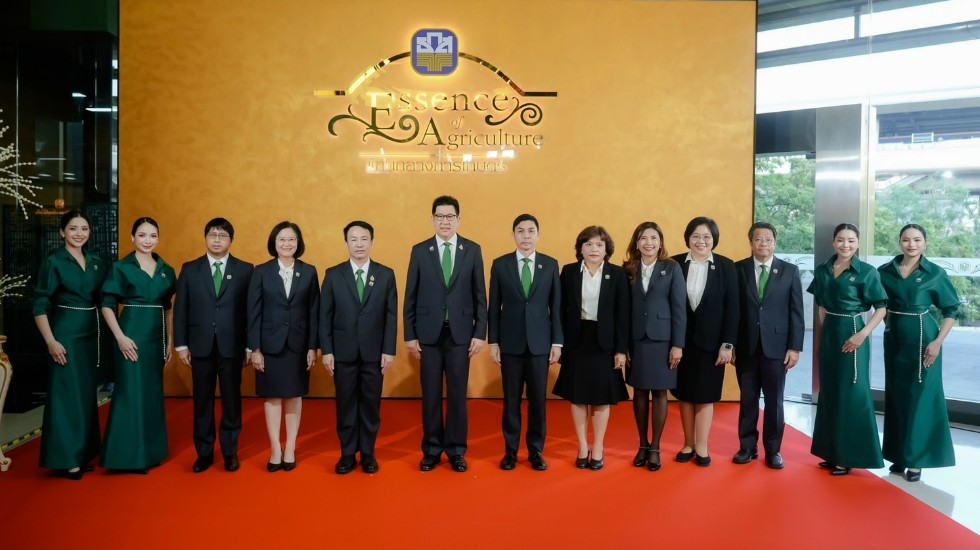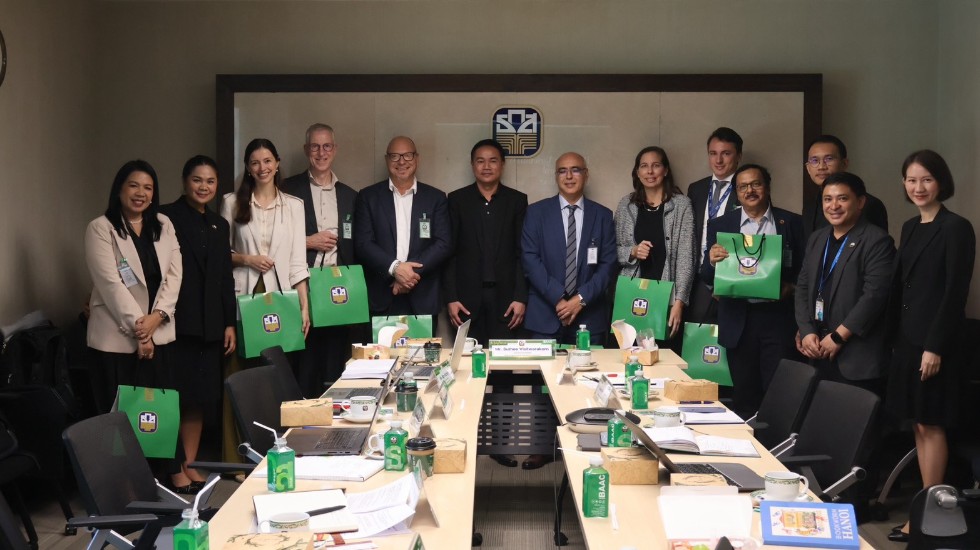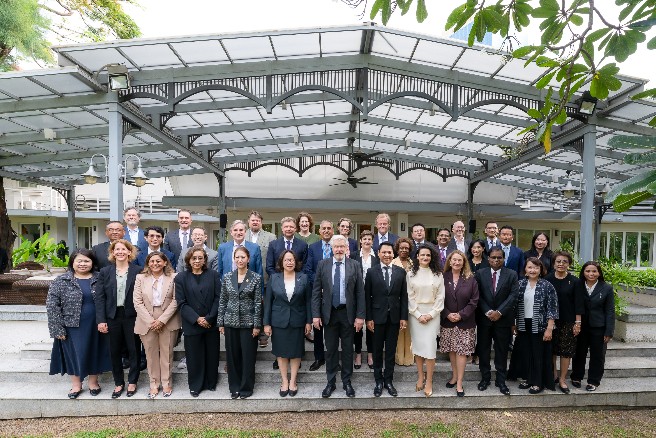
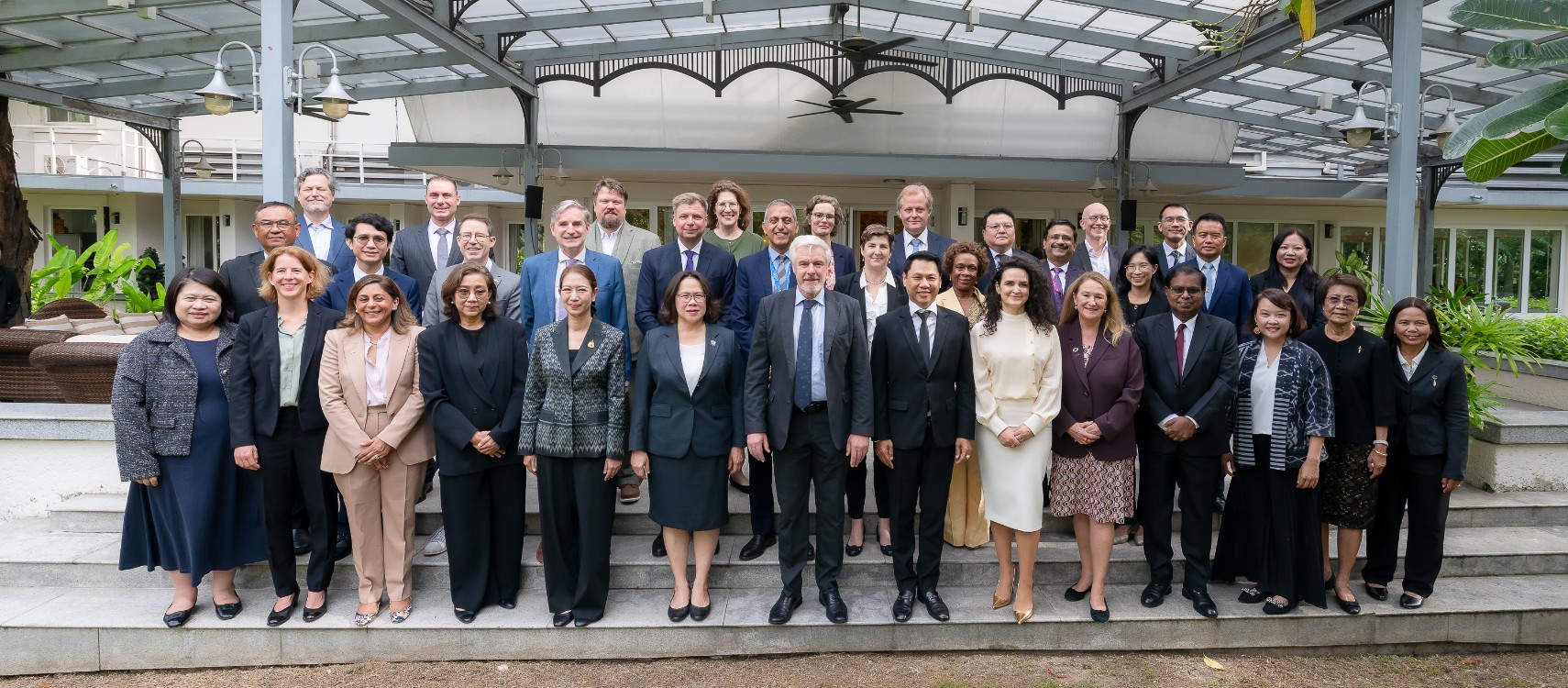
On 14 October 2026, Ms. Prommakorn Promkutkeo, Executive Vice President of Bank for Agriculture and Agricultural Cooperatives (BAAC), and Mr. Wichai Paksa, Vice President of Policy and Strategy Department BAAC, were invited by the Deutsche Gesellschaft für Internationale Zusammenarbeit (GIZ) Thailand and the Green Climate Fund (GCF) to attend a meeting on "Developing Financial Mechanisms for Secure and Climate-Resilient Food Systems: Opportunities and Lessons from Thailand's Rice Sector for Sustainable Scale-Up" at the Embassy of the Federal Republic of Germany in Bangkok.
The meeting used Thailand's rice sector as a case study through the Thai Rice: Strengthening Climate-Smart Rice Farming (Thai Rice GCF) Project. It brought together 30 representatives from organizations across the rice value chain, including the Ministry of Agriculture and Cooperatives, the Rice Department, the Department of Agricultural Extension, the Office of Natural Resources and Environmental Policy and Planning (ONEP), the International Rice Research Institute (IRRI), Olam Agri, PepsiCo, and Mars Food & Nutrition. Participants discussed on the design of climate finance mechanisms that link food security, climate change adaptation, and greenhouse gas emission reduction; financial instruments that meet the needs of smallholder farmers and the rice value chain; applying lessons from Thailand's rice sector to other crops and other countries; and each partner's experience, support approaches, and needs in advancing secure and climate-resilient food systems. Also set out a shared vision of success, including the target of reducing greenhouse gas emissions by 2.44 million tonnes of carbon dioxide equivalent (tCO₂e) by 2028.